
Money-saving goals are resolutions for many people in 2011. Here are some ways you can do to achieve it:
Coupon System
Too often, my newspaper pile becomes a graveyard for coupons. Potential savings die an early death because of clutter. For instance, I have squandered store coupons sporting savings of $1 to $10 due to missed deadlines or misplaced coupons. For 2011, I've begun to store coupons in a side pocket of my purse, which is always with me. Wallets and glove-compartments in cars are also a great place to store coupons.
Unplug Chargers
Even when not used, cell phone chargers, coffee makers, micro-wave ovens and other appliances drain energy when plugged into wall sockets. Conserving cash and energy is my January goal, and I've been teaching my kids to unplug idle appliances. But this step requires organization and constant awareness. When we are running late, we leave the house in a whirlwind of anxiety and fail to take energy-saving steps. An earlier wake-up call will preserve energy and create less stress.
Time-Sensitive
Late fees and other financial penalties are the byproduct of disorganization. To avoid missed deadlines, I plan to raise my financial IQ with my smartphone and laptop. Both devices provide digital calendars that can be programmed with bill reminders and deadline alerts. There are also a variety of online services that offer e-mail notices about approaching deadlines. Online bill-paying programs also add organization and efficiency.
Chores
With better organization some household chores and personal tasks can become money-saving, do-it-yourself projects. For example, if you have the talent and the right tools, you can save money with haircuts, manicures, pedicures and other personal grooming chores. Car-washing, lawn mowing and house-painting duties can also represent frugal home projects. But calculate the cost of your time, and honestly evaluate your skills.
 Most water bottles are made of a plastic called polyethylene terepthalate, or PET. There are two problems with PET bottles.

 Astronomers have found a planet which is one of the best candidates for life ever found by telescopes on Earth. The planet is rocky, like ours, and orbits its sun within the 'habitable zone', where temperatures are just right for liquid water to exist on the planet's surface.
 Rather than tossing all of those trees immediately into the recycle bin, you can give them a brand new life, here are several tips:
 Electric E-Bugster concept chops the Beetle’s top and replaces its petrol engine with plug-in drivetrain. Leaked images and details of a funky new version of the Volkswagen Beetle that runs purely on electricity have been revealed online.
 Even a far-far universe celebrates Christmas. Yes, Nasa scientists were in a very festive mood in last week, releasing an amazing image of a nebula they nicknamed the 'wreath nebula.' The scene looks like a ring of evergreens decorated with a red Christmasy bow with silver bells throughout.It was captured by Nasa's WISE space telescope. The star-forming nebula is actually named Barnard 3, or IRAS Ring G159.6-18.5, discovery.com reports.
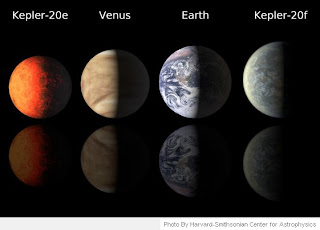 Last week, scientists have found doubled Earth-sized planets orbiting a star outside the solar system, an encouraging sign for prospects of finding life elsewhere. The discovery shows that such planets exist and that they can be detected by the Kepler spacecraft, said Francois Fressin of the Harvard-Smithsonian Center for Astrophysics in Cambridge, Mass. They're the smallest planets found so far that orbit a star resembling our sun.
 Tablet computers and electronic readers promise to eventually close the book on the ink-and-paper era as they transform the way people browse magazines, check news or lose themselves in novels. “It is only a matter of time before we stop killing trees and all publications become digital,” Creative Strategies president and principal analyst Tim Bajarin told AFP.
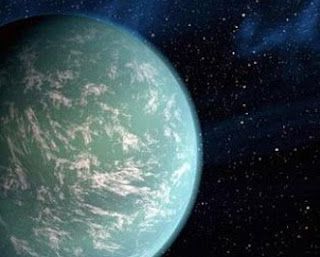 Astronomers have discovered the first habitable blue planet orbiting in the habitable zone of a star similar to the Sun. NASA’s Kepler Mission has been finding new worlds at an incredible rate over the past year but this is the first discovery of what could be a habitable super-earth as it appears to be large, rocky planet with a surface temperature of about 72 degrees Fahrenheit, similar to spring day on Earth.
 New research suggests the continuation of life on Earth depends on massive explosions on the other side of the galaxy.
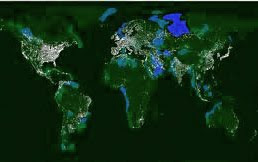 The story of energy for mankind began when fire was discovered for the first time in the ancient world. Since then human started to consume energy and it was taken from renewable energy resources such as sun, wind and water power. Together with the development in industrial sectors, demands for energy have increased significantly, human started to explore and began massive exploration and production of energy. The advancement of technology human owned at that time has a major contribution in the exploration of energy resources, and that was the time when energy consumption had accelerated rapidly.
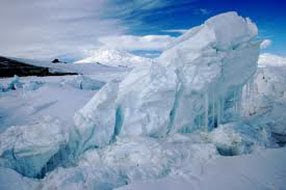 The sun is heading into an unusual and extended period of hibernation that could trigger a mini-Ice Age on Earth, scientists claim. A decrease in global warming might result in the years after 2020, the approximate time when sunspots are expected to disappear for years, maybe even decades.
 Here are expert tips on how to keep your computer running smoothly: It is never fun to have to consistently wait any amount of time if the shut downs are too frequent. Sleep’ requires more power, but it boots up faster, while ‘Hibernate’ uses less power, but takes longer to come online, that same logic applies to shutting off your computer completely.
 A devastating tsunami triggered by the biggest earthquake on record in Japan looked set to kill at least 1,000 people along the northeastern coast on Friday after a wall of water swept away everything in its path.
 The mystery of what killed tens of thousands of fish that washed up along the Arkansas River late last year can't be solved, state wildlife officials announced Wednesday, but they do have a theory about what caused birds to fall out of the sky in a small Arkansas town on New Year's Eve.
 Roughly 5,000 red-winged blackbirds fell from the sky over a mile of land near Beebe, a small town in northwest Arkansas, and observers spotted the fish kill near the town of Ozark. Maybe the Mayans were on to something?
 When you're talking about retrofitting a large building like the Empire State Building or replacing bulbs in thousands of Starbucks stores, the energy savings can be huge.
 Scientists using cutting-edge technology to explore waters off Indonesia were wowed by colorful and diverse images of marine life on the ocean floor — including plate-sized sea spiders and flower-like sponges that appear to be carnivorous.
  It is an image that should put us firmly in our place. Set against the inky blackness of space our Earth can be seen with the smaller Moon orbiting around it from a distance of around 114 million miles.
 Humans helped drive a species of giant turtle to extinction almost 3,000 years ago, according to a study in PNAS. It is one of the first cases that clearly shows that humans played a role in the demise of the giant, extinct animals known as "megafauna". An Australian research team discovered turtle leg bones - but not shells or skulls - on an island of Vanuatu.


