26.3.11

Apple's iPad 2 Hits Overseas Stores after U.S. Sellout

apple logoCustomers lined up outside Apple stores in Australia and New Zealand last week for the international launch of the iPad 2, which has flown off the shelves in the United States leaving the company struggling to meet demand.

Analysts forecast some 1 million devices may have been sold in the first weekend of the launch in the United States, but many warn that it’s not clear how supply constraints will affect availability following the Japan earthquake and tsunami.

Apple plans to roll out the new iPad on Friday to 25 markets including France, the United Kingdom, Canada, Denmark, Germany, Italy, Mexico, Netherlands, and Spain. The iPad 2, a thinner and faster version that features two cameras for video chat, was introduced in the United States on March 11.

But some would-be buyers have expressed frustration at how difficult it has been to secure one of the wildly popular tablet computers, sparking speculation Apple misjudged demand.

“If it wasn’t for the iPad, I wouldn’t be in Australia right now,” said Alex Lee, a backpacker from Canada, who was the first in the queue outside the glass-fronted Apple store in Sydney’s central business district.

He said he diverted his travels from Singapore to attend the launch. “It’s like a habit. I’ve also lined up on Regent Street in London for the iPhone”, added Lee, who had a folding chair and blanket and had spent two nights waiting.

23.3.11

Are We Too Reliant on GPS?

GPSIt is an issue that many law enforcement agencies and governments don't want to discuss, according to Professor Andrew Dempster, a specialist in satellite navigation signal processing and receiver design.

The problem? Australia and the world's reliance on global navigation satellite systems (GNSS), commonly known to many as GPS, and its vulnerability to be deliberately jammed or unintentionally interfered with.

"There is ... [a] group of people (users) who don't want to talk about it," said the professor, who works at the UNSW School of Surveying and Spatial Information Systems.

"They don't want to draw attention to the fact that GPS can be jammed. They don't want people to know that it's vulnerable. And included in that group are all the major telcos, some of the authorities that track vehicles and I imagine that the police are the same – that they don't talk about it that much."

Critical infrastructure that can be impacted by interference can include plane and airport navigation systems, emergency service vehicles, ships and security vans, some of which carry large amounts of money. Researchers in Britain have gone as far as saying that GPS failures could lead to "loss of life".

One known example of an airport and planes landing there being impacted by unintentional interference has already occurred in the US, the professor said.

According to The Economist, a driver who passed the Newark airport in New Jersey each day had a GPS jammer installed in his truck for personal reasons. The Economist said it took two months in late 2009 for investigators to track down the problem, which led to "brief daily breaks in reception."

18.3.11

More Facts about St. Patrick

St. Patrick's DayReliable sources said that over the past 24 hours, Web searches for "st. patrick" and "who was st. patrick" have both tripled. Add to that the related searches on "was st. patrick really irish" and "did st. patrick get rid of all the snakes in ireland."

Here now are some quick answers to those questions and more.

Did St. Patrick rid Ireland of snakes?
Sorry, but no. It is true that there are no snakes in Ireland these days, but there never were any. National Geographic explains that because Ireland is surrounded by chilly waters, there is no way snakes could migrate there in the first place. National Geographic speculates that the snakes could be symbolic of the "pagan ways" that St. Patrick drove out of Ireland.

Was St. Patrick Irish?
According to History.com, St. Patrick was actually born in Britain. At the age of 16, he was captured by Irish raiders and transported across the sea to Ireland. After spending six years in captivity, Patrick escaped, traveled back to Britain, and trained to become a priest. Once his training was complete, he returned to Ireland "to minister to Christians already living in Ireland and to begin to convert the Irish."

Did Patrick use clovers while preaching?
Legend says that he did. Catholic.org writes that Patrick used a three-leafed shamrock to explain the Holy Trinity to the locals. However, other sites call this story just a myth. And, by the way, a bit of trivia regarding four leaf clovers. They are indeed rare, but they aren't exactly one in a million. It is estimated that there is one four leaf clover for every 10,000 three-leaf ones.

Tsunami killed thousands of seabirds at Midway

Tsunami Killed BirdsThousands of seabirds were killed when the tsunami generated by last week's massive earthquake off Japan flooded Midway, a remote atoll northwest of the main Hawaiian islands, a federal wildlife official said recently.

At least 1,000 adult and adolescent Laysan albatross were killed, along with thousands of chicks, said Barry W. Stieglitz, the project leader for the Hawaiian and Pacific Islands National Wildlife Refuges.

Many drowned or were buried under debris as waves reaching 5 feet high rolled over the low-lying atoll about four hours after the magnitude-9.0 earthquake struck Friday.

The white-and-black feathered Laysan albatross is not in danger of becoming extinct. About 1 million of the birds live at Midway Atoll National Wildlife Refuge about 1,300 miles northwest of Honolulu, making it the largest Laysan albatross colony in the world.

But Stieglitz said the deaths could account for a significant share of Laysan albatross chicks hatched during the current season.

Japan’s earthquake shifted balance of the planet

EarthLast week's devastating earthquake and tsunami in Japan has actually moved the island closer to the United States and shifted the planet's axis.

The quake caused a rift 15 miles below the sea floor that stretched 186 miles long and 93 miles wide, according to the AP. The areas closest to the epicenter of the quake jumped a full 13 feet closer to the United States, geophysicist Ross Stein at the United States Geological Survey told The New York Times.

The world's fifth-largest, 8.9 magnitude quake was caused when the Pacific tectonic plate dove under the North American plate, which shifted Eastern Japan towards North America by about 13 feet (see NASA's before and after photos at right). The quake also shifted the earth's axis by 6.5 inches, shortened the day by 1.6 microseconds, and sank Japan downward by about two feet. As Japan's eastern coastline sunk, the tsunami's waves rolled in.

Why did the quake shorten the day? The earth's mass shifted towards the center, spurring the planet to spin a bit faster. Last year's massive 8.8 magnitude earthquake in Chile also shortened the day, but by an even smaller fraction of a second. The 2004 Sumatra quake knocked a whopping 6.8 micro-seconds off the day.

12.3.11

Japan's quake toll set to exceed 1,000

Japan TsunamiA devastating tsunami triggered by the biggest earthquake on record in Japan looked set to kill at least 1,000 people along the northeastern coast on Friday after a wall of water swept away everything in its path.

The government warned there could be a small radiation leak from a nuclear reactor whose cooling system was knocked out by the quake. About 3,000 residents in the area some 240 km (150 miles) north of Tokyo had been moved out of harm's way.

Underscoring grave concerns about the Fukushima plant, the U.S. air force delivered coolant to avert a rise in the temperature of its nuclear rods, but officials said a leak was still possible because pressure would have to be released.

The unfolding disaster in the wake of the 8.9 magnitude earthquake and 10-meter (33-feet) high tsunami prompted offers of search and rescue help from 45 countries.

9.3.11

NASA says 'no support' for claim of alien microbes

aliensTop NASA scientists said there was no scientific evidence to support a colleague's claim that fossils of alien microbes born in outer space had been found in meteorites on Earth.
The US space agency formally distanced itself from the paper by NASA scientist Richard Hoover, whose findings were published Friday in the peer-reviewed Journal of Cosmology, which is available free online.

"That is a claim that Mr Hoover has been making for some years," said Carl Pilcher, director of NASA's Astrobiology Institute.

"I am not aware of any support from other meteorite researchers for this rather extraordinary claim that this evidence of microbes was present in the meteorite before the meteorite arrived on Earth and and was not the result of contamination after the meteorite arrived on Earth," he told AFP.

"The simplest explanation is that there are microbes in the meteorites; they are Earth microbes. In other words, they are contamination."

Pilcher said the meteorites that Hoover studied fell to Earth 100 to 200 years ago and have been heavily handled by humans, "so you would expect to find microbes in these meteorites."

3.3.11

The World's Smallest Computer

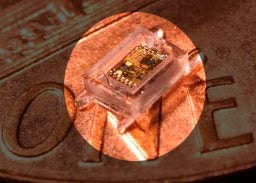
World's Smallest ComputerScientists have created the world's smallest computer system to help treat glaucoma patients. At just one square millimetre in size, the tiny device is a pressure monitor that is implanted in a person's eye.

It may be small but it packs a hefty punch, containing an ultra low-power microprocessor, a pressure sensor, memory, a thin film battery, a solar cell and a wireless radio with an antenna that can transmit data to an external reader device.

Developed by researchers at the University of Michigan, the unnamed unit - which is expected to be commercially available in several years - is already being touted as the future of the computing industry.

Its creators - Professors Dennis Sylvester, David Blaauw and David Wentzloff - claim that as the device's radio needs no tuning to find the right frequency it could link to a wireless network of computers.

A network of such units could one day track pollution, monitor structural integrity, perform surveillance, or make virtually any object smart and trackable, according to the scientists.

27.2.11

Coca-Cola's recipe revealed?

Coca-Cola recipeEver since the creation of Coca-Cola in 1886, the precise recipe has been a closely guarded secret. The only official written copy is supposedly held in a U.S. bank vault and only two company employees at any one time are said to know the whole formula that gives the fizzy drink its distinctive flavour.

But now, 125 years of near-total secrecy look to be over, as a website claims to have uncovered a list showing the ingredients and quantities used to make the drink.

The list, it claims, was actually published without fanfare in a 1979 local newspaper article in Coca-Cola’s U.S. home town of Atlanta, Georgia – but no one appeared to realise its significance.

The website, Thisamericanlife.org, said the 32-year-old article – buried on Page 28 of the Atlanta Journal-Constitution – shows a photograph of a recipe purported to be an exact replica of Coca-Cola creator John Pemberton’s.

The recipe had apparently been written by a friend of pharmacist Mr Pemberton’s then passed down through the generations. A can of Coca-Cola currently simply refers to its specialist ingredients as ‘Natural flavourings including caffeine’ alongside carbonated water, sugar, phosphoric acid and colour (Caramel E150d).

The closest the company itself has come to divulging its recipe was the admission that it originally included cocaine, although the narcotic was removed in the early 1900s.

22.2.11

‘Loch Ness Monster’ England’s version pictures taken by Kayakers

British version of the Loch NessTom Pickles and Sarah Harrington have never expected anything like what they had just experienced. Their afternoon's kayaking have turned out quite shocking after the sighting of a primeval sea monster. These kayakers have taken their watercraft out on the foggy waters of Lake Windermere, only to encounter what appeared to be "an enormous snake" swimming by.

But what did Pickles and Harrington expect? Didn't they know that Lake Windermere is reputedly the home of the British version of the Loch Ness monster? In the past five years, sojourners on the lake have reported eight sightings of a Nessie-like serpent.

But the kayaking couple rallied from their shock and snapped the clearest photo of the Windermere "monster" since the sightings began. A journalism professor and his wife inaugurated the recent spate of Nessie-esque encounters on the lake back in 2006 reporting they had seen a "giant eel" somewhere between 15-20 feet long.

Ever since then, researchers have set out upon the lake with sonar equipment, in pursuit of "Bow-Nessie," as the creature's British compatriots like to call it. But so far, their efforts haven't borne fruit.

19.2.11

The world's first anti-laser

anti laserPhysicists have built the world's first device that can cancel out a laser beam - a so-called anti-laser. The device, created by a team from Yale University, is capable of absorbing an incoming laser beam entirely.

But this is not intended as a defence against high-power laser weapons, the researchers said. Instead they think it could be used in next-generation supercomputers which will be built with components that use light rather than electrons.

Professor Douglas Stone and colleagues at Yale University had initially been developing a theory to explain which materials could be used as the basis of lasers.
Strange lasers. Recent advances in laser design have resulted in a number of unusual devices that do not fit the traditional concept of a laser, Professor Stone explained.

"So we were working on a theory that could predict what could be used to form a laser," he said.

That theory also predicted that instead of amplifying light into coherent pulses, as a laser does, it should be possible to create a device that absorbs laser light hitting it, said Professor Stone - an anti-laser. They have now succeeded in building one.

15.2.11

IBM supercomputer TV quiz with $1 million prize

IBM supercomputer WatsonIBM has designed a supercomputer named as Watson to face two human contestants on the US quiz show Jeopardy. Watson will pit its wits against two of the game's most successful players.

At stake is a $1 million prize (£620,000) and the reputation of the field of artificial intelligence.

The company said Watson signals a new era in computing where machines will increasingly be able to learn and understand what humans are really asking them for.

Jeopardy is seen as the greatest challenge for Watson because of the show's rapid fire format and clues that rely on subtle meanings, puns, and riddles; something humans excel at and computers do not.

11.2.11

Walking 'boosts memory power'

walking boost memoryWalking about 40 minutes a few times a week is enough to preserve memory and keep ageing brains on top form, research shows. Moderate exercise increased the size of the hippocampus, an area of the brain that makes memories, in 120 volunteers.

The year-long trial, published in Proceedings of the National Academy of Sciences, showed performance on memory tests also improved.

Exercise may buffer against dementia as well as age-related memory loss. The latest work looked at healthy people in their 60s rather than people with Alzheimer's or other forms of dementia.

But the findings have important implications for ageing societies faced with a dementia time bomb. In the UK, 820,000 people have dementia, and this figure is set to double by 2030.

8.2.11

Six Little Things That Can Cost You a Lot

money savingMost of us do it. We spend little amounts regularly on things like lunch, Starbucks lattes, manicures, golf maybe even for having a pizza delivered while we watch a weekly game on TV.
These seem like reasonable decisions about relatively small expenses. It's hard to imagine how much they add up.

The harsh reality is that each dollar that's spent today isn't available for something else tomorrow. And these little purchases have a way of robbing us of the things we really want.

Why? Most of us haven't stopped to consider whether that daily latte is truly precious to our well-being, or if it's just a habit. If it's precious, it's worth doing at least part of the time. But is it worth giving up the convertible Mustang that all those cups of coffee could otherwise have purchased?

These are actually the trade-offs we make when we don't look at the long-term costs of niggling day-to-day expenses. The chart below makes the trade-offs clearer by providing a 10-year and 30-year cost.

2.2.11

NASA finds a new whole worlds outside solar system

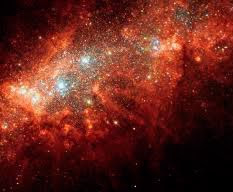
worlds outside solar systemNASA's planet-hunting telescope is finding whole new worlds of possibilities in the search for alien life. An early report from a cosmic census indicates that relatively small planets and stable multi-planet systems are far more plentiful than previous searches showed.

NASA released new data Wednesday from its Kepler telescope on more than 1,000 possible new planets outside our solar system — more than doubling the count of what astronomers call exoplanets. They haven't been confirmed as planets yet, but some astronomers estimate that 90 percent of what Kepler has found will eventually be verified.

Kepler, launched in 2009, has been orbiting the sun between Earth and Mars, conducting a planet census and searching for Earth-like planets since last year. It has found there are more planets that are much smaller than Jupiter — the biggest planet in our solar system — than there are giant planets.