 Most water bottles are made of a plastic called polyethylene terepthalate, or PET. There are two problems with PET bottles.
Problem 1: They take a boatload of crude oil to produce. University of Louisville researchers estimate that around 17 million barrels of oil are used each year to produce PET water bottles—a major reason why bottled water costs roughly four times as much as gasoline.
Problem 2: We’re chucking our water bottles in the trash, instead of the recycling bin. According to the Container Recycling Institute, nearly 90 percent of the 30 billion PET water bottles we buy annually end up in landfills—a huge problem when you consider that PET bottles take from 400 to 1,000 years to decompose.
The bottom line: We should take more tap water whenever possible.


 Astronomers have found a planet which is one of the best candidates for life ever found by telescopes on Earth. The planet is rocky, like ours, and orbits its sun within the 'habitable zone', where temperatures are just right for liquid water to exist on the planet's surface.
 Rather than tossing all of those trees immediately into the recycle bin, you can give them a brand new life, here are several tips:
 Electric E-Bugster concept chops the Beetle’s top and replaces its petrol engine with plug-in drivetrain. Leaked images and details of a funky new version of the Volkswagen Beetle that runs purely on electricity have been revealed online.
 The interior, designed by Marc Newson includes LCD touch panels, leather seating, plants, sheepskin-covered full-length beds and more than 1,000 videos to choose from.
 If Santa fancies taking a breather after his gift-giving jaunt around the world tonight, there's one spot on the planet where he'll feel right at home. For the town of Harbin in northeast China has created an entire city carved out of ice and snow. The 28th Harbin International Ice and Snow Festival, which opens on January 5, features work by some of the best ice sculptors and attracts thousands of visitors from around the world.
 Even a far-far universe celebrates Christmas. Yes, Nasa scientists were in a very festive mood in last week, releasing an amazing image of a nebula they nicknamed the 'wreath nebula.' The scene looks like a ring of evergreens decorated with a red Christmasy bow with silver bells throughout.It was captured by Nasa's WISE space telescope. The star-forming nebula is actually named Barnard 3, or IRAS Ring G159.6-18.5, discovery.com reports.
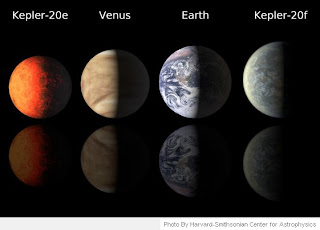 Last week, scientists have found doubled Earth-sized planets orbiting a star outside the solar system, an encouraging sign for prospects of finding life elsewhere. The discovery shows that such planets exist and that they can be detected by the Kepler spacecraft, said Francois Fressin of the Harvard-Smithsonian Center for Astrophysics in Cambridge, Mass. They're the smallest planets found so far that orbit a star resembling our sun.
 And eating a heavy mid-day meal will often make you feel lethargic for the rest of the afternoon. "Consider what you're eating at lunch. If you're having that post-pasta slump at 2 p.m., and need java or cookies to pep back up, maybe you should try a salad or something a bit lighter so you won't lag," suggests Hohlbaum.
 Tablet computers and electronic readers promise to eventually close the book on the ink-and-paper era as they transform the way people browse magazines, check news or lose themselves in novels. “It is only a matter of time before we stop killing trees and all publications become digital,” Creative Strategies president and principal analyst Tim Bajarin told AFP.
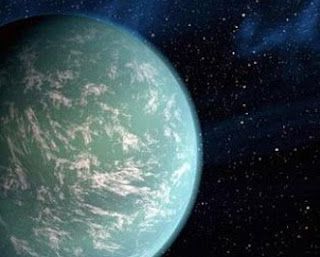 Astronomers have discovered the first habitable blue planet orbiting in the habitable zone of a star similar to the Sun. NASA’s Kepler Mission has been finding new worlds at an incredible rate over the past year but this is the first discovery of what could be a habitable super-earth as it appears to be large, rocky planet with a surface temperature of about 72 degrees Fahrenheit, similar to spring day on Earth.
 "They are monstrous," Berkeley astrophysicist Chung-Pei Ma told reporters. "We did not expect to find such massive black holes because they are more massive than indicated by their galaxy properties. They're kind of extraordinary." The previous black hole record-holder is as large as 6 billion suns.
 Many 'sea caves' are famous among the watersports community - largely because you have to strap on a pair of flippers and an air tank to explore sights such as Belize's Great Blue Hole.
 The fisherman who discovered the Cyclops shark is reportedly hanging on to the preserved remains, news outlets reported. But scientists have recently examined and X-rayed the fish, authenticating the catch. According to Seth Romans, a spokesman for Pisces Fleet, Galvan Magana and his colleagues will publish a scientific paper about the find within the next several weeks.
 New research suggests the continuation of life on Earth depends on massive explosions on the other side of the galaxy.
 An activist said that orangutans in many of Indonesia’s zoos were allowed to smoke as visitors could freely toss cigarettes to them without proper monitoring.
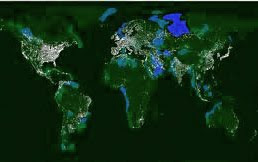 The story of energy for mankind began when fire was discovered for the first time in the ancient world. Since then human started to consume energy and it was taken from renewable energy resources such as sun, wind and water power. Together with the development in industrial sectors, demands for energy have increased significantly, human started to explore and began massive exploration and production of energy. The advancement of technology human owned at that time has a major contribution in the exploration of energy resources, and that was the time when energy consumption had accelerated rapidly.
 An unmanned hypersonic glider developed for U.S. defense research into super-fast global strike capability was launched atop a rocket early Thursday but contact was lost after the experimental craft began flying on its own, the Defense Advanced Research Projects Agency said.
 From gigantic whale penises to speck-sized field mouse testicles and lampshades made from bull scrotums, Iceland's small Phallological Museum has it all -- and recently put its first human member on display.
 An ancient landscape long ago submerged beneath the North Atlantic Ocean has been discovered by scientists.


