Showing posts with label Parents and Kids. Show all posts

12.4.12

How to beat The Claw

The Claw machineSquatting menacingly in the corner of your favorite restaurant, movie theater, supermarket or bowling alley, the claw machine is a harsh mistress. There's something unmistakably hostile about its steely, three- or four-fingered grip, and something immeasurably frustrating about the feeling of horror and loss you get as your prize slips from your tenuous grasp at the very last second.

Don't despair. Instead, even the odds a little. Follow these simple tips, and you can't lose.

Study your machine

The more tempting and desirable the prizes, the lower the chances you'll win. Expect machines with expensive prizes to have claws that move faster, grip looser, and generally do everything possible to foil your attempts to snag their contents. If all you want to do is win something, machines with cheaper prizes are a better bet.

Another good idea? Look for machines that aren't packed tight with prizes -- a little space can go a long way. It's also worth sizing up the pile of goodies. Are they stacked in such a way as to make it hard to pull them apart? If the prize you want is tucked under another toy, it's going to be that much harder to grab, as the claw typically isn't strong enough to dig a toy out from underneath other objects. Perhaps a little strategic repositioning is in order before you tackle the big prize -- or perhaps there's another machine with a more favorable arrangement.

Timing is everything

Don't be afraid to take your time. Depending on the machine, you'll likely have a total of 15 or 30 seconds to hit the all-important "Drop" button. There's no harm in taking almost all of that to make sure your alignment is dead-on. Plan to hit the button when there's about five seconds left on the clock, and you'll have ample time for the machine to haul out whatever you've snagged.

Use a spotter

Having two eyes is overrated. Unless you're some sort of ping-pong prodigy, your depth perception probably ain't all that -- and if you want to boost your chances of snagging that awesome claw-machine prize, you're going to need some way of augmenting it. Some sort of cybernetic implant would be ideal, but if you can't swing that, find yourself an accomplice.

How's that going to help? You look after the side-to-side alignment, and have your partner stand around the corner of the machine and take care of the front-back direction. No matter how lousy your depth perception might be, as long as your spotter is on the ball, you'll drop the claw right on the prize every time.

Watch and wait

But that might not be enough. According to a report on the British show Brainiac, some claw machines are configured so that four times out of five (or nine times out of ten) they'll deliberately grab the toy with a greatly weakened grip. Only on that lucky fifth run will it use enough force to actually keep hold of the prize. In other words, they're rigged.

True? False? Nobody seems to know for sure -- except the manufacturers, and you can bet they're keeping a tight grip on the info. Still, if you're sizing up a busy machine, it may make sense to watch other players and see if there's a pattern to their wins and losses.

13.1.12

Symptoms and How to detox from technology?

detox from technologyThese are symptoms identified as showing your tech habits might be unhealthy:

You can’t go more than a few minutes without checking your smartphone for email or texts.
You log onto Facebook many times a day so you won’t miss an “important” post.
You feel your phone vibrate and whip it out of your pocket and discover it was a case of “phantom pocket vibration syndrome.
You excuse yourself to the restroom specifically to check in with your online world.
You sleep with your cell phone next to you and say you are using it as an alarm when, really, you want to be able to check texts that come in during the night.

How to detox from technology

Most people can benefit from stepping back. Start with 15 minutes of going without checking emails, texts, or social networking sites. Then enjoy using your tech toys for a one-minute "tech break" — a time to use technology. As you discover you aren’t going to miss anything drastically important and start to feel more at ease and focused, you can increase the time between tech breaks.

Rather than fighting kids' compulsion to be connected, it’s more productive to help them gradually expand the time they can stay focused on something other than their mobile device or computer. For example, ask your child or teen to put down their device during a family meal but assure them that they can have a one-minute tech break every 15 minutes afterwards. Gradually increase the time between tech breaks. This strategy is even being implemented in schools where some kids’ anxiety about checking their devices can make it difficult for them to focus in class.

14.12.11

American Woman Helping Poor Women Named Hero of The Year

Robin LimAn American woman, Robin Lim, who has helped thousands of poor Indonesian women have a healthy pregnancy and birth, was named the 2011 CNN Hero of the Year on Sunday night.

Through her Yayasan Bumi Sehat health clinics, "Mother Robin," or "Ibu Robin" as she is called by the locals, offers free prenatal care, birthing services and medical aid in Indonesia, where many families cannot afford care.

"Every baby's first breath on Earth could be one of peace and love. Every mother should be healthy and strong. Every birth could be safe and loving. But our world is not there yet," Lim said during "CNN Heroes: An All-Star Tribute," which took place at the Shrine Auditorium in Los Angeles and recognized Lim and the other top 10 CNN Heroes of 2011.

Many women in the developing world do not have access to contraception or maternal care. According to the United Nations Population Fund, three out of five women giving birth in South Asia do so without a skilled birth attendant on hand.

31.10.11

Ten-year-old Girl Speaks TEN Languages

languagesShe might only be 10-years-old, but little Sonia Yang can already speak an incredible 10 languages.

And the schoolgirl has been crowned the north west of England's best young linguist after stunning teachers with her detailed knowledge.

The youngster, from Cheadle Hulme, Stockport, was born in Taiwan but moved to England with her family to begin primary school.

When she arrived here, Sonia was already fluent in Japanese, Chinese and English, as well as her native Taiwanese. But she can also now speak German, French, Spanish, Portuguese and has recently picked up Kazakh and the Ugandan language of Luganda.

18.7.11

First Photos of Beckhams' Baby Girl Harper Seven

Harper SevenDavid Beckham posted a photo on his Facebook page showingwife Victoria getting some rest with their newborn daughter. "I took this picture of my two girls sleeping," he wrote.

Victoria, 37, also tweeted a picture Sunday of David, 36, tenderly holding their newborn daughter. In the black and white photo, David cradles Harper Seven and sweetly touches her nose with his. She's "Daddy's little girl," Victoria explained.

Harper Seven was born July 10 at Cedars-Sinai in Los Angeles. David and Victoria also have three sons: Brooklyn, 12, Romeo, 8, and Cruz, 6.

On Thursday, the fashion designer tweeted that "baby Harper is the most beautiful baby girl I have ever seen. I have fallen in love all over again!" "We feel so blessed," she added. "And the boys love their baby sister so much."

12.4.11

Introducing World's First Facebook Bullying Alert System

Facebook Bullying Alert Systemwhat a concerned father can do when he want to stop abusive behavior such as bullying? He developed the world's first bullying alert system for Facebook! NHS consultant Paddy Clarke's software scans walls and inboxes for trigger words and phrases such as 'gay' and 'fat' and alerts parents when they appear. The father-of-four came up with the idea after reading a string of cyber-bullying horror stories.

Mr Clarke, 48, said he hoped his system - called 'Know Diss' - will keep children safe from online bullies. He said: 'Bullying has now gone from the playground into children's homes. 'Kids feel safe sending an abusive message in their rooms. It is pretty awful.

'Cyber-bullying is very topical at the moment, particularly following some tragic cases where young people have taken their lives because of it. 'It is hard to believe but this software is the only one in the world to search through text on social networking sites to protect children.

'Know Diss is a very simple concept. It is also a partnership between parent and child because one cannot sign up without the other.' Mr Clarke, a consultant in pain relief at Gloucestershire Royal Hospital in Gloucester, joined forces with friend Alan Saul to design and implement Know Diss, which costs £12 for a yearly subscription.

31.8.10

Don't Leave Your Baby too Long, They stressed Out!

Baby stressThey may have barely mastered sitting up by themselves. But six-month-old babies become stressed out when they don't get the attention they feel they deserve.

Levels of the stress hormone cortisol soar when they are ignored by their mother, and even a day later they are worried about the same thing happening again.

A baby who is deprived of its mother's love for just two minutes is anxious about being ignored again the next day, a study found. Experts in child development said that repeated episodes of stress could have a huge effect on a youngster's health and on his or her course in life.

To investigate whether six-month-olds are capable of anticipating trouble, the Canadian researchers invited 30 mothers and babies into their laboratory and divided them into two groups.

29.7.10

Friendship A Prescription for Good Health

friendshipDo you know that having good friends can do wonders for your health? Research shows! A life of booze, fags and slothfulness may be enough to earn your doctor's disapproval, but there is one last hope: a repeat prescription of mates and good conversation.

A circle of close friends and strong family ties can boost a person's health more than exercise, losing weight or quitting cigarettes and alcohol, psychologists say.

Sociable people seem to reap extra rewards from their relationships by feeling less stressed, taking better care of themselves and having less risky lifestyles than those who are more isolated, they claim.

A review of studies into the impact of relationships on health found that people had a 50 per cent better survival rate if they belonged to a wider social group, be it friends, neighbors, relatives or a mix of these.

The striking impact of social connections on well being has led researchers to call on GPs and health officials to take loneliness as seriously as other health risks, such as alcoholism and smoking.

20.5.10

Study Says Soothing Moms Lower Her Kids Stress Hormones

Did you know that children overflow with love and attention from his or her parents, especially mothers, will grow up into a happy, intelligent, and more healthy person.

Latest research by University of California, Los Angeles, United States shows that early childhood experiences have a long-term health effects, particularly on the risk of inflammation which is an immune reaction by the body when attacked by disease. This study concluded that Mom who cares her kids will help them grow with less stress hormones that tied to disease.

To know the biological mechanism that occurs, the research team took blood samples from 53 adults who grew up in an environment with low socioeconomic status. Half of the respondents admitted having a close relationship with their mother, While the rest said rarely had that kind of attention.

In the group that has close ties with their mother, was only found little genetic marker of inflammation. Genetic marker is a molecule that indicates that the gene has been actively into proteins, in this case proteins that contribute to inflammation.

11.3.10

It’s Anime time!

Anime has been so popular over this last decade. Not only children love them but also teenager and adult audiences. It grows in popularity in a very short time. Anime or Japanese cartoon has become a world-wide sensation, it spreads across countries quickly and now almost everyone watches anime. It has its own TV show, some TVs even has its specialization showing only Anime movies. Anime has even Wipeout many other popular shows in the TV business.

The reason behind this phenomenon is in the storyline, unique characters and excitement offered by this kind of show, it always offers some new things that audiences can discover in each of the anime. This makes Anime easily grown in popularity, gains more and more audiences. The storyline in Anime has a wide range of content, from children’s tell to teenager content show; there is a show for every member of the family and on top of this, in the internet era people can also find anime online.

It has a very board genre, from science fiction, fantasy, action to romance. The distribution of anime is also one major factor and become a big support that make Anime grows in popularity very fast. All these factors have made Anime become one successful industry generating huge profit and entertain millions of people. One Anime that has becomes so popular (because it had almost everything a good Anime required as a popular show) is Bleach the Anime. To mention a few more is One Piece, Inuyasha and the latest show is K-ON! It’s Anime time, happy watching!

8.12.09

How does laughter heal?

laughter heal"Clown is like aspirin, only he works twice as fast," said the late Groucho Marx, a comedian star whose words are often quoted. Why did he say that?
1. Laughter relieves anxiety. Therefore, one can not laugh and feel scared at the same time. It is physically impossible. Laugh also minimizes the source and size of our fear.

2. Laughter eases the sense of solitude. Because, laughter makes us want to socialize with other people and ease the sense of solitude.

3. Laughter reduces aggression and conflict. People who laugh do not be rude to others.

4. Immune system become stronger with a laugh, stress hormone levels were reduced, the heart and circulatory system healthy, and the muscles become more relaxed.

5. Laughter is the source of heart-healthy exercise, especially for those who are in elderly period. In addition, laugh also will make a special breathing pattern and is good for the health of respiratory organs.

6. Laughter works like a good virus because it spread rapidly. Spread to the whole world with laughter will reduce the anger and violence.

7. Our mental health will be better with a laugh. Stress is reduced, as well as anger and worry. It has a positive effect, feeling happy and positive attitude increases.

8. We become more creative and able to solve the problem because of laughing. It has also proven can increase job satisfaction. We can work harder, but felt comfortable. In short, productivity increased.

9. Everyone can laugh. Humans are born with a talent to laugh. Sense of humor is not really necessary to if it is just for a laugh.

10. Laughter is a natural process that reduces the pain, both physically and emotionally. This is a natural remedy from the body itself. Multiply laugh and you will find that it only takes a little drug to enjoy life.

16.11.08

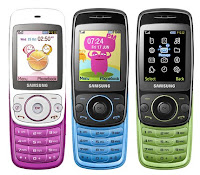
Samsung Tobi Astonishingly Adorable Mobile Phone

Samsung’s Tobi S3030Samsung announces the launch of the Tobi S3030 mobile phone customized to amuse pre-teens, young adults and anyone who wants to have fun from mobile phone. The phone comes with friendly graphical user interface and unique GUI themes. It is available in six colors, Sweet Pink, Loyal Blue, Apple Green, Bright Orange, Oasis Blue and Snow Silver.

Samsung’s Tobi S3030 features a 1.9-inch display, a 1.3 Megapixel camera, integrated music player, Bluetooth 2.0, 15MB internal memory and a microSD card slot.

Samsung has used eco-friendly materials without any polyvinyl chloride (PVC) to build the Tobi. Moreover, Samsung Tobi features changeable backside cover. Users can insert their favorite photo or image under the see-through protective sleeve on the back to customize their Samsung Tobi.

The phone will be available first in Italy and the UK and then other European countires, CIS and China.

Specification

Network GPRS Tri-Band (900/1800/1900 MHz)
Display 1.9” QCIF 65K
Camera 1.3-megapixel camera
Audio Music Player (MP3, AAC, AAC+, eAAC+, WMA)

Value-added Features
Three themes (Monster, Snowman, Ocean world)
Six color variations (Sweet Pink, Loyal Blue, Apple Green,
Bright Orange, Oasis Blue and Snow Silver)
SOS function (SOS call, SOS message, Fake call)
Eco-friendly and non-toxic material
Changeable backside images
Games (Brain Challenge, Tetris Mania)

Connectivity Bluetooth messenger Bluetooth 2.0, USB 2.0
Memory Internal Memory: 15MB; External Memory: Micro SD (Up to 8GB)
Size 94.7x 45.4x 17.5 mm, 85g

16.7.08

8 simple solutions to help your child learn good money management habits (Part 2)

Here are 8 simple solutions to help your child learn good money management habits to give him or her (and you!) a more financially secure future (Part 2)

5. Give an allowance. One of the best ways for kids to learn to manage money and keep a budget is by giving allowances. How much to give depends on your child's spending habits and maturity, and your comfort level. And encourage your child to always save a portion of that allowance (as well as money that is a gift).

6. Keep a spending log. From the time your child can write and count, give him some kind of a simple recording book to keep track of his money. A young child can track his earnings (including holiday money gifts); an older child can record his earnings and expenses. Gradually explain the “break-even point” so your older child begins to learn the necessary skills for balancing a checkbook, keeping a savings account and maintaining a budget.

7. Teach smart buying habits. Encourage your child to read consumer reports online before purchasing that pricey gadget. Ask your daughter to list what she needs before hitting the mall, then stick to it. Tell your son to check the newspaper for sales. Let your child choose among items by comparing prices. Give your child a clothes budget by having her estimate costs, and then honor it.

8. Encourage an entrepreneurial spirit. Help you child set up that lemonade stand. Print flyers that say he'll mow the neighbors' lawns. Offer to baby-sit. Walk the neighbor's dog. Your child can learn from a young age that how you earn money is through hard work. Not only will you encourage your little entrepreneur but you'll also help him appreciate the value of money.

If you haven't taken your child to the bank to help him open up a savings account (for younger kids it can be a Holiday Savings Account) and checking for an older kid, write it down in your “To Do” list. The sooner our kids learn the value of a dollar, the most financially secure they will be. It's the one lesson we may not be teaching our kids and the one in today's economy they just may be needing the most (iVillage.com)

8 simple solutions to help your child learn good money management habits (Part 1)

Here are 8 simple solutions to help your child learn good money management habits to give him or her (and you!) a more financially secure future.

1. Be a good role model. Kids always look to us as the example to copy. If you always are overdrawn, why expect your son set a budget? If you buy clothes impulsively why should you expect your daughter to wait for the sale? If you don't talk about the value of money, don't think your child is ever going to learn that money doesn't grow on trees. Be the model of money management you want your kids to copy.

2. Use real-life examples. Show your daughter how you balance your checkbook. Talk to your son how your credit rating is checked before purchasing that car. Show your kids the household bills so they know how much electricity, gas, water, phone and cable cost. You don't need to reveal your income or savings but you should use real opportunities to help your child understand money.

3. Don't give loans. Kids learn money management by trial and error. So don't bail her out if she “overspends” and runs out of money needed that week for the movie. If you do give an advance, consider charging interest. She'll soon figure out that borrowing is pricey. You can discuss pay for extra jobs, such as mowing the lawn or washing the car- especially if the child is saving for a big or special item.

4. Set a capped budget. Allocate a certain amount for expenses like a back-to-school wardrobe. As an incentive, explain that if there's money left over she can pocket it. Make your kid contribute to those nonessential “have to have items” like the trendiest sneaks or those pricey jeans. You can pitch in some, but he has to make up the rest (iVillage.com)

15.7.08

Being a good partner with your health professional

Here are some tips for being a good partner with your health professional:

* Build a relationship with your health professional. Let your health professional know that you want to be a partner in your health care. Tell the health professional what your expectations are.

* Be an active participant in each appointment. Listen carefully to what your health professional says. If you do not understand a diagnosis or treatment, ask questions. Tell the health professional if you do not think that you can carry out the prescribed treatment.

* Prepare your child for tests and exams. Let your child know why he or she is seeing a health professional and what will be done during the visit. Your child's age and developmental level will determine how best to prepare him or her.

22.4.08

Darah tali pusar bayi! kek horror judulnya…..

Gue kemana saja ya selama ini? Kok enyak babeh gue ngga nyimpan darah tali pusar bayi gue ya? Yg ada pasti cuman dikubur plus bullpen, uang dollar, modem, dll, or malah dibuang2in ya? ntar mo nanya emak! Ternyata, dan ternyata, darah di tali pusar bayi itu manjur bin mantaf!

Sekedar sharing, gue baru baca artikelnya di Intisari, sel induk di darah tali pusar bayi menyimpan informasi genetika paling komplet! Sel ini bisa ditumbuhkan menjadi sel jantung, sel ginjal, sel otak, sel liver, dan organ tubuh lainnya, dan yg ngga kalah menakjubkan, di dalamnya terkandung informasi genetika pemiliknya secara lengkap, mulai dari A sampai dengan Z!

Melihat kenyataan ini, Mum and Daddy Mizwar (eh salah ya….) kalangan elite berlomba menyimpan darah di tali pusar bayi ini di tempat penyimpanan di luar negeri. Ya kuciwa diriku membaca sampai disini, gue pikir semua orang semua kalangan bisa nyimpan!

Ya sudahlah, hidup manusia sesungguhnya tergantung sama yg yg nyiptain darah di tali pusar bayi, jangan sama manusianya! Oh.. makin terheran heran gue sama sang pencipta, Dia sungguh luar biasa!

15.2.08

Teach Your Child to Escape or Prevent an Abduction

"Kid Escape" is a method that you can teach to children to help them learn how to escape from someone who is trying to abduct them. Practice these steps with your child at home. It could very well save his or her life!

Steps

For children aged 12 years and under:

1. Teach your child how to react if anyone grabs a hold of him or he and tries to get your child into a vehicle:
* The first thing is to get down as low to the ground as possible. Start wiggling and twisting and climbing down the would-be abductor's body until you can reach the person's ankles. Keep moving and squirm, turn about and climb right down the body.
* As soon as you reach the ground, wrap your arms around one of the attacker's ankles, and wrap your legs around the attacker's other ankle. Try to lock your body around the attacker's legs and ankles the best that you can.
* Realize that the attacker will be trying like mad to get the you off him or her. If the attacker manages to actually break free from you, don't try to get up and run. Stay on the ground, and just try to scoot yourself backwards away from the attacker. Do this as if you are walking like a crab. If the attacker tries to grab you again, just grab a hold of his or her legs again.
* If your are on the ground on your back, you can always just kick at the attacker wildly.

For older kids aged around 12 years and older:

Teach your child that the would-be abductor can be tackled as follows:
* The best thing for you to do is grab onto your attacker as if you're giving him or her a big bear hug. He or she will immediately start trying to push you away.
* Try to bite your attacker's shoulder as you hang on.
* The closer you are to the attacker's body, the harder it is for him or her to hit you or grab a hold of you.
* As soon as the attacker breaks the connection between the two of you, just run as fast as you can.

Tips

* It's important for you to scream as loud as you possibly can during the entire attempted abduction. You want as many people as possible to notice what's happening.
* Teach your child to yell things like, "I DON'T KNOW THIS PERSON!" and "I'M BEING KIDNAPPED!" This will get people's attention very fast, rather than them thinking your child could possibly just be someone's bratty kid screaming for candy.

13.2.08

Get Your Two Year Old to Stop Crying and Go to Sleep Alone

There are a million books on this subject, and there is no easy way to get your child to sleep though the night unless they are ready. One thing you must never do is to get frustrated in front of your child. If they are upset, they will never go to sleep. Keep in mind our child did not sleep completely through the night until he was over a year old. Also, if your baby is breast-feeding, or still taking a bottle at night, this probably will not work

Steps
  1. Put your kid on a schedule. ie. dinner, play, bath, books, bed-time. Try to do things consistently and at the same time every night when possible.
  2. Announce it is time to go to bed and to give kisses (unless they are too young to know what you are talking about, in which case, good luck.) Take them to their bedroom.
  3. Turn out the lights but DO leave some kind of night light on, then rock, or sing, or do whatever you do before putting him/her in bed.
  4. Put them in Bed.
  5. Soothe them a little by rubbing tummy or back or whatever. Soothe, but don't stimulate. Make it as boring as you can.
  6. Did they fall asleep? Didn't think so.
  7. Try to sneak out of the room.
  8. If they cry for you, go right back to them, don't let them cry.
  9. Repeat steps 5 through 8 until they fall asleep.
Tips
  1. This is not something that happens overnight. Sometimes you will get to the door, close it, and they will call for you. It is important to always go back and soothe them some more and don't let them cry.
  2. Some people will tell you to let them cry it out and this may or may not have quicker resulults, but If you don't want to submit your child to this heartbreak, you are left with the hard way. As were we.
  3. When you go back to soothe, try to do it while they are in the bed without taking them out of the crib. Only take them out if they are extremely upset.
  4. Try not to get angry at your child. It is perfectly normal for them to not sleep through the night. Every child is different.

12.2.08

Get Your Children Away from TV (2)

Does it seem that the kids have forgotten what the garden looks like or the park across the street? Is their conversation dotted with TV show lingo and do they base their next week's schedule around what's on TV? And the big question - are your kids glued to the TV all the time? If so, time to take control and give them a new lease on life that does not revolve around the box.

Here are some more tips
  1. Make it a rule that there is no TV watching before homework is done. Unwinding after school should be relaxing, not getting hyperactive in front of the TV.
  2. It can be a good idea to get kids out of TV during summer first. Summer TV is usually re-runs and fairly drab. And it is much easier to get out of doors during summer! Once the routine is in place for summer, gradually replace indoor TV as the months get darker with indoor activities, like games and reading. Continue going to museums, skating rinks, and indoor sports places as you did during summer.
  3. A good rule-of-thumb for TV watching is : No TV for children under the age of 2. The TV can never be a substitute for learning about the world around them; One to two hours and no more per day for children aged over two. Also suitable for adults.
  4. Place your TV in the closet. Removing the TV from the center of your living space communicates that it is no longer the center of your lives.
  5. Sell your TV. Want to go over the top? Want kids that love to read? Want kids that pay attention in school? Want to foster creative and self-entertainment? Want to spend more time communicating, playing, etc.? Want to be the person giving the values instead of all the strangers with their strange ideas from television land? Want to set your kids up for a much healthier lifestyle? You can always watch a movie on your computer screen, a movie you selected.
  6. Disconnect the cable. Most cable providers have several television stations geared toward children, and many have television stations that show cartoons all day. Without "children's TV stations," your children may actually look forward to getting up on Saturday Morning to watch cartoons.
  7. Buy or rent the television programs that you want to watch and watch them after the kids go to sleep. Many network programs are also available on demand on the internet within a week of airing on television. By doing this, you can watch television on your own schedule without exposing your children to your shows.
  8. Discuss your TV reduction with your kid's friend's parents. If they know what you want for your kids you can help stop TV watching away from home.
  9. Not letting children watch television may save you money. Children are very susceptible to influence from television commercials. Without commercials, you children may not be as brand conscious, and they won't request things in television commercials they don't see.
  10. Reduced exposure to commercials will have many benefits for your children: reduced desire and impulses to eat junk food or sweets, reduced desire/impulses to buy the latest toys and other fads. A good way to do this is to get them alot of Disney movies, they usually are good quality, and contains important life lessons, and there is no commertials on it, or only let them watch Disney channal, it has very little advetisments and the advertisments usually are about there own movies, not junkfood and toys.
  11. Do not replace the TV with the computer or video games. If you allow this, you may well be setting the kids up for an alternative addiction. Try to allow everything in moderation and with clear limits.
  12. It is a good idea to monitor what your children are watching. If you don't, you won't know what they are seeing and this can manifest itself in very negative ways if they are witnessing violence, sexually explicit content, or even just too many advertisements. Remember, TV viewing must be quality, no matter what. More importantly, monitoring what they watch keeps you involved in your child's life.

11.2.08

Get Your Children Away from TV (1)

Does it seem that the kids have forgotten what the garden looks like or the park across the street? Is their conversation dotted with TV show lingo and do they base their next week's schedule around what's on TV? And the big question - are your kids glued to the TV all the time? If so, time to take control and give them a new lease on life that does not revolve around the box.

Steps
  1. Tell the kids that the TV free-for-all is at an end. Explain to them that the level of TV viewing has reached a point of no return and that other activities in life are being neglected. Then tell them that the TV time is going to be regulated from now on. There will be whining, there will be arguing and there will be the typical clever rationalizations that kids are famous for. Stick to your decision - TV time is being axed!
  2. Develop a TV reduction plan. In consultation with your kids, sit down together and plot TV viewing time. Get a copy of the weekly TV schedule from your regular paper or magazine. Ask the kids which shows they like the most. Then tell them that those are going to be the only programs they can watch. Also consider allowing a time limit of 1 - 2 hours per day (or less, especially on school nights) of viewing and no more. If there are more programs than hours alloted, the kids will be forced to choose.
  3. Turn it off. Only permit the TV to be on when the program is being watched. Do not allow it to run as background noise. It will distract the kids and draw them back to it even if the program is not one that interested them initially. One option is to use an adapter to control the TV's power supply, only allowing them to watch at certain times of the day.
  4. Go cold turkey for the whole family. All for one and one for all. One drastic measure is to get rid of the TVs. Yes, it is drastic but if you have a family that is highly addicted to TV, it may be the only way to kickstart this plan. Give the TVs to a family member or friend to keep for a week to a month whilst the whole family goes cold turkey and relearns what they used to do before the TV was invented. One word of warning - do not turn to the internet, video games and other sources of electronic entertainment in place. Instead, bring out those old board games, playing cards and jigsaws to do together as a family.
  5. Take TVs out of bedrooms. Just because a TV is affordable and keeps the kids out of your hair does not mean that having TVs in bedrooms is acceptable. Bedrooms are for peace, rest and quiet play. TVs do not instill rest and peace, especially not kids' programs, which are deliberately aimed at keeping kids interested through energizing them. Keep the TV (or TVs) in public areas only: somewhere that is easy for you to monitor. If you have a larger family, you may need to consider an additional TV to avoid too many sharing clashes but in the main, sharing and compromise are two important skills to be teaching your kids.
  6. Do not keep a TV/DVD/VCR in your vehicle. It's amazing how many parents rely on a DVD or VCR in their vehicle to keep the kids "quiet". Road trips or car errands are a great time for kids to draw, read books, play with Barbies or Transformers, talk with parents, listen to music, or just watch the surroundings out the window, etc. Kids don't need to be entertained all the time.
  7. Provide alternatives. Kids are learning about their world everyday. Make sure that most of their learning comes from self-experience and not from being told about things via the medium of TV. To assist their self-exploration and to perk their curiosity, provide a range of alternative activities. Keep an activity cupboard packed with activities such as: Science kit projects (erupting volcanoes, magnets, 3D models, electronics kits, weather forecasting kits, natural discovery books and kits etc.); Craft, art and drawing materials.; Board games, playing cards, marbles, miniatures, Lego bricks, building kits, etc.; A good library of kids' books aimed at their ages, across a wide variety of subjects.
  8. Encourage outdoor and sporting activities. Keep a good supply of balls, bats, rackets, shuttlecocks, jump ropes, Frisbees, bikes, and other outdoor objects handy. Go to the parks, the pool, or the football field and be active together. Encourage older kids to go by themselves and play sports with friends. Enroll kids of all ages in sports classes, either team or individual, depending on your kids' expressions of interest.
  9. Go on outings together. Visit museums, parks, science centers, aquariums, zoos, amusement parks, mini-golf, the cinema, the beach -- anywhere that gets them away from the TV. Travel on the train to the end of the line just to see where it goes and come back again. Help out with volunteer projects. Do a variety of things that encourage the kids to explore their world and see, touch, taste, smell, and hear it for themselves, senses that no TV program can ever truly stimulate or replicate.
  10. Reward adherence to the TV reduction plan. Once the TV reduction plan has become routine and the kids are watching less TV (only their allotted programs), reinforce their changed focus with rewards. The rewards might be activity based, such as going to an amusement park or the theater or they might be material, such as new clothes, books or CDs.
  11. Set a good example. It should go without saying that your behavior matters. What you do will demonstrate to the kids what is okay to do. Watch less TV yourself, remove any TV from your bedroom, participate in the kids' activities, and be active in sports, fitness, and exercise. You will not only be setting your kids a great example but you'll be doing yourself a favor, too. Just see how much more time emerges in your day when you restrict the TV viewing!