Showing posts with label Life. Show all posts

23.4.12

WHY IT'S NOT SO BAD: Anger


The key is figuring out how to appropriately channel your anger rather than lash out. Expert lays out the three easy steps.

1) Figure out exactly what triggered your anger. Was it the rude comment your coworker made during lunch?
2) Consider any other emotions that may be behind your anger. Do you feel embarrassed about the snide remark she made in front of other people? Are you really unhappy with your job but afraid of change, so you don't look elsewhere?
3) Plan a course of action to fix the situation. Have a conversation with your coworker to find out why she made that comment. Check job boards and see what other opportunities are out there.

A good rule: Always "sleep on it" or take some time before reacting. The physiological effects of a triggered emotion affect how you think, says Dr. Lamia. Giving yourself a few hours can help you clearly think through what's going on and the best action to take.

19.4.12

How to know if you should stay or go

to let goThere’s no such thing as a relationship without challenges. However, some stumbling blocks are merely garden-variety annoyances, while others are bona fide deal-breakers. Here is a Guide to Knowing if Your Relationship Can — and Should — Be Saved.

1. Consider how you and your partner resolve conflicts
In an unhealthy relationship (i.e., one that really isn’t working), when you hit those periods of conflict, you’ll notice either right away or soon enough that you are not a team struggling for mutual well-being. Unsure about whether you and your partner are have an unhealthy conflict resolution approach? When you argue, does it become about who can win and/or who can hurt the other more effectively, or does one (or both) of you become explosive or cruel? Is it characterized by your partner thinking almost exclusively about what is good for him or her, not about what’s good for you or the relationship? If any of these statements ring true for you, it’s probably a wise decision to get out.

2. Recognize the difference between irritating habits and deal-breakers
Some of the most troubling and potentially deal-breaking problems one can face with a partner are immaturity, addiction, unresolved or untreated mental health issues (including the after-effects of trauma, depression and personality disorders) and abusiveness. Each one of these is a big ticket item, meaning it will likely cost you a great deal of emotional energy and time to be in a relationship with your partner and one of these issues. You may decide that, no matter how much you love your partner, you don’t want to put so much energy into dealing with anything so consuming.

3. Think about the consequences of ending the relationship
When debating whether to leave or stay, first considering whether you’ve ever felt frightened of your partner. Has this person ever physically attacked you, or made you feel that he or she was on the verge of it? Has your partner ever forced you sexually? Has your partner said anything like, “You’d better not ever try to leave me” or anything similar that suggested he or she wanted you to be afraid of ending things? If your intuition tells you that your partner may have a volatile reaction, that’s a pretty good sign that walking away from your relationship is a good idea.

4. Imagine a life without your partner
When you’re trying to decide whether staying in your relationship will be truly beneficial or not, ask yourself if you have remained true to who you really are during the time you’ve been with your partner, and what your life would look like if you were no longer together. Remember that having love, approval, kindness and appreciation for yourself is at least as important as getting it from someone else; if these feelings are impossible to have while in your current relationship, it’s time to get back into having a loving, supportive connection with yourself.

17.4.12

Gargle Salt Water for a Sore Throat

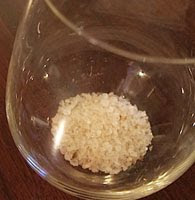
Gargle Salt WaterWhen you were a kid and had a sore throat, your mom likely made you gargle warm water with salt in it...and she was definitely on to something. According to Douglas Hoffman MD, PhD, author of the website The Medical Consumer's Advocate, a sore throat is an inflammatory response of the infected tissues, and the salt helps draw out the excess fluid to temporarily decrease swelling and the pain it causes.

Most remedies call for a ratio of 1 tablespoon salt to 8 ounces of water, but it's always better to opt for more salt rather than less.

Just keep in mind that you are treating the symptoms-not the illness. As Dr. Hoffman notes on his website: "The relief is very real, but also tends to be short-lived, since the gargle has done nothing to remove the cause of the sore throat."

16.4.12

Clear Your Clutter, Find Your Life

Clear Your ClutterClutter accumulates so quietly, so insidiously, we may not even notice until it's gotten out of control. Suddenly, we're surrounded by so much debris from our past -from dried-up tubes of Glue to old grudges -that it's a wonder we can even get out of bed in the morning.

As a life coach, many experts help people figure out not only what they want most, but what they need to let go of to discover who they really are -the "stuff" in closets, drawers, attics, and so on. You just have to figure out what you really need and what you don't. Start today, clean your clutter.

14.4.12

How to Say No

say noThere are lots of reasons we struggle with "no." Some feel bound by obligation or by fear of hurting someone's feelings. Others believe they really can do it all (and hate to pass up the opportunity to try). But think about it: Almost every misplaced yes is really a no to you.

By asserting yourself in a considerate, confident way, says negotiator William Ury, Ph.D., author of "The Power of a Positive No," you can be selective about what you take on without jeopardizing friendships -- a people-pleaser's biggest fear. Try our five-step plan so that you can start saying no -- and stop feeling guilty.

Find Your Yes
Before you can even think about getting good at saying no, get clear on what to say yes to in life. If your yes is more time with your family, that will mean turning down obligations that keep you away from home. If it's yes to better health, you'll need to say no to late nights at work that keep you from the gym. The firmer your foundation and connection to your yes, says Ury, the less difficult it will be to say no. After all, you'll be answering to a higher cause.

Buy Some Time
Whenever possible, don't respond to a request on the spot. This keeps you from saying yes under pressure ("Um ... sure, I'll host the baby shower") or reacting emotionally to the request, especially when you're feeling stressed out.

Deliver Your No with Grace and Resolve
The moment of truth can be the most difficult of all, particularly when you're afraid of hurting someone's feelings. Ury suggests a "yes-no-yes" approach: First, share what you're currently saying yes to ("My mother and I always go out for breakfast on Saturday mornings"). Then say no ("So I won't be able to help you set up for the brunch you're hosting").

But don't stop there. After you've turned someone down, affirm your good intentions by closing with another yes -- this time, to a mutually positive outcome ("But I'd be happy to help clean up after it's over"). In so doing, you relieve some of the frustration wrought by closing a door, while sending the message that you respect the other person's needs.

Have a Plan B
Even if the other person gets emotional or reactive after you've delivered your no, don't yield under pressure -- as difficult as this may seem. Instead, take a deep breath and listen attentively to his or her objections. Then, gently but firmly, underscore your no -- and keep it simple and clean; no backpedaling or scrambling for defense.

Cut Yourself Some Slack
Even with practice, some will always find saying no a challenge. For the dyed-in-the-wool people pleaser, there may be a twinge of guilt -- and, for the overly ambitious, regret. Realize that your perennial inclination to offer help is something to be lauded, not criticized.

9.4.12

Tips that help reset your internal clock

rilexHere are some tips to help reset your internal clock and survive your first couple of days back at work or school:

Start going to bed 15 minutes earlier a couple of nights before the time change.
Set your alarm 30 minutes earlier on Saturday and Sunday morning you are used to getting up earlier on Monday.

Go outside early Saturday and Sunday morning.
If you don't have a pre-existing health condition, exercise outdoors, but not after 4 p.m. which can disrupt sleep later.

Refrain from napping over the weekend.
Avoid alcohol on Sunday night. While it might knock you out, alcohol disrupts sleep patterns.

Eat a healthy, substantial breakfast Monday morning to provide you with energy to get through the day.

6.4.12

The Secrets of Happy Couples

Happy CouplesWhat is surprising, experts point out, is that when you ask loving husbands and wives about the key to their devotion, over and over you'll hear the same things, specific habits that mirror these values. Learning these secrets can make your marriage closer too.

They use terms of endearment

Sure, you may find it cloyingly sweet when you overhear other couples talking like 2-year-olds, but endearments are actually a sign of a healthy rapport.

These feelings of intimacy can also come from using a special tone of voice with each other, sharing silly "inside jokes," or pet-naming your spouse's intimate body parts. The point is to connect with some private message system that's meaningful to you alone, as a couple -- not to the outside world.

When the going gets tough, they don't call Mom or Dad

The first task facing all young couples is separating from their families of origin. This doesn't mean you shouldn't go home for the holidays. But if there's a crisis over whether to have a second child or relocate for a new job, or even if there's good news about a big raise or the results of a medical test, the couple should talk about it together first before dialing Mom.

They stay connected to their parents

This doesn't contradict with the above point. You can talk with your mom every day and still be clear about where your attachment to her ends and your love for your mate begins.

Staying connected to parents, siblings, cousins and the like can be excellent for a marriage because it gives a sense of family continuity. It generates positive feelings, especially when you incorporate your spouse into that family. You're sharing that part of you with each other.

They don't nickel-and-dime about chores

It's no secret that most wives continue to do more in the housekeeping and child-rearing departments than their husbands. Still, when partners become double-entry bookkeepers, adding up every dish washed and every diaper changed, they may be headed for trouble.

Most couples think they should strive for a relationship that's 50-50,but the fact is, they should each give 150 percent. In good relationships, couples give everything they can. They don't nickel-and-dime each other, and they respect that each person gives different things.

They give each other gifts

Couples who are deeply connected often give each other presents or write little notes, says Thomas Moore, Ph.D., best-selling author of Care of the Soul. What they're doing is preserving the rituals, and the magic, of their courtship.

The gift should carry no strings. Sarah sometimes comes home from work to find that her husband has prepared a candlelight dinner. But it's not set up to be a prelude to sex.

They never lose their sense of humor

Humor, as many psychotherapists have observed, is the glue that keeps a couple together. When a couple can no longer laugh together, it's a signal that the soul has gone out of their marriage and they are headed for trouble.

But lighthearted couples never mock each other. They instinctively know what is -- and isn't -- fair game.

They take "for better or for worse" seriously

Contented couples encounter their share of life's miseries -- whether it's the car breaking down, a nasty cold or a missed promotion -- but they help each other get through. You don't, for example, hear them say, "How could you let that happen?" when a spouse loses a job. Couples who do well together tend not to do anything that increases their partner's suffering, like become resentful or criticize. In good marriages, people feel safe from the outside world. Each spouse has the feeling, I can count on you, our world is all right.

1.4.12

The Power of Touch

power of touchA study at the University of Virginia showed that holding a spouse’s hand can diminish stress set off by a mild electric shock. A total of 16 couples took part; first the wives received the shocks while their brains were monitored via functional magnetic resonance imaging (fMRI).

Next, each woman held the hand of a stranger during the shock--this dampened the stress response seen in the brain. Finally, the women held their husbands’ hands during the shock and the fMRIs showed that the reduction in stress was even greater.
The Cuddle Hormone

Women who get the most hugs from their partner have the highest levels of oxytocin, a hormone sometimes called the “cuddle hormone,” University of North Carolina researchers reported.

Oxytocin is believed to play a role in social bonding and has a powerful effect on the cardiovascular systems. In the study, the frequent huggers had lower blood pressure. So there you have it, love is good for almost everything. The only exception: it doesn’t help you lose weight.

24.3.12

Facebook: Surprising Cause of Stress

Surprising Cause of StressYou love taking a midday break from work and finding out what your pals are up to, but could everyone else's status updates be stressing you out? Maybe, says expert. Social networking, like any relationship, can have an impact on your emotions, adding that online news bites can sometimes, inadvertently, make others feel inadequate.

For instance: the status update from your old friend from high school who announced that she/he's just met her/his soul mate, who's spending time on a two-week Mediterranean cruise, just as you've signed your divorce papers.

Notice how you're feeling when you spend time on Facebook and pay attention to why. If it makes you feel bad, trust your instincts and log off. Call a friend, curl up with a good book, go for a walk-do something that genuinely brings you pleasure."

21.3.12

Happy Couples do stuff together

happy couplesWhen that pheromone-crazy feeling of falling in love passes and happy couples no longer spend all day in bed, they look outward. They start businesses, refinish the attic or take up cooking together.

Of all the variables in a relationship -from commitment to communication- the amount of fun couples have together is the strongest factor in determining their overall marital happiness, according to a landmark study by Howard Markman, Ph.D., codirector of the Center for Marital and Family Studies at the University of Denver. Time spent playing together, says Dr. Markman, is an "investment in the relationship"; it provides a relaxed intimacy that strengthens the bond between two people.

So even if your life is impossibly frantic, make the time for play. And do all you can to eliminate distractions. Leave the kids with a sitter, ditch the beeper and cell phone. The activity doesn't have to be anything elaborate or costly. Exercising together, browsing in antiques stores, or renting a classic movie can help bring the two of you closer.

19.3.12

Why a cup of coffee (or two) isn't so bad?

cup of coffeeA couple of cups of joe may perk you up in more ways than you think. Coffee gets a bad rap because of the caffeine, but it may actually help regulate your mood. A recent study published in Archives of Internal Medicine showed that women who drank two to three cups of coffee daily had a 15% lower risk of depression. Photo by iStock

"Caffeine helps activate the brain chemicals involved in mood, like dopamine and serotonin," says study author Alberto Ascherio, MD, a professor of epidemiology and nutrition at Harvard School of Public Health. Coffee is also a rich source of antioxidants and other healthy compounds that may help protect against cancer, according to new research.

One caveat: If you don't drink coffee, don't start (caffeine is a stimulant and can cause jitters or an upset stomach in some people). But if you're a java lover, consider this permission to pour yourself an extra cup.

16.3.12

Expert tips for calming pre-date jitters

pre-date jittersHelp is here. Here're some tips on how to overcome this common problem. We’ve rounded up advice from experts who teach people how to stay calm in nerve-wracking situations. Try their tips below for putting your best dating foot forward.

Tip #1: Keep a healthy perspective about what first dates are really for “The first and most important step in overcoming the fear is to put your first date in perspective: this is not an appointment with the dentist or brain surgeon who may inflict pain on you; rather, it is a conversation with another person. The worst thing that can happen is that you won’t connect with the person sitting across from you — it’s hardly the end of the world! Second, think of this date as a two-way process. You are interviewing a potential partner as much as your date is interviewing you. Is there a good fit here? What looks good on the surface or on paper may not be what it appears to be for either party. Investigate whether this person is a good match for you and whether you want to invest a significant part of your life and energy in future dates.”

Tip #2: Breathe deeply while counting silently to calm yourself down “Here is a simple (but amazingly powerful) breathing technique you can easily do to manage stress while sitting in the car or on the train before a date. While breathing through the nose only, inhale to the count of three and exhale to the count of six. It only takes about two or three minutes to experience a noticeable, full-body calming effect. The reason? Deep breathing triggers your parasympathetic nervous system to counteract the ‘fight-or-flight’ response that underlies your jitters and results in shallower breathing. And if, during the date, you feel yourself getting nervous again, ask an open-ended question, like: ‘So, what’s working at a college really like?’ and then put a soft smile on your face while you breathe the shakes away!”

Concentrate on the present moment instead of worrying about the future “Dating is like auditioning — the stakes are high, so nerves will undoubtedly come into play. I would tell daters the same thing I tell my actors: When you get nervous, put your concentration into the present moment instead of the outcome. Every time you start to think about the future — “Will this person ask me out on a second date?” — force yourself to focus on the conversation at hand. You stand a better chance of booking another date if you can let someone see the type of person you really are, and that you’d be easy to get along with. You can’t do that if you’re draining your own energy trying to figure out what your date wants and what the result might be.”

Release pre-date tension by working up a sweat in the gym
“Work out first! You’ll have a positive feeling from all the endorphins, you’ll feel more confident about your appearance, and you’ll have released the tension from your muscles. Or, instead of going right to the date from your office or home, socialize a bit first — either by meeting a friend somewhere or otherwise putting yourself in a situation where you’re turning on your most positive personality for others. Doing this will make you walk into the date already feeling engaged and ‘up.’ Just do not talk about the upcoming date while you’re socializing, because that will put your mind back on the subject... and could make you nervous all over again.”

Put any negative thoughts in writing, then put a positive spin on them before leaving for your date “Divide a sheet of paper in half. On the left side of the page, write down how your critical inner voices or negative thoughts are undermining your self-confidence. Write them down as though you are talking to yourself; for example, ‘Don’t get too excited about this date. He/she is not going to find you attractive enough.’ Next, on the right-hand side of the page, write down a more realistic or congenial statement about yourself. Like, ‘I may not be a supermodel, but I have good features and a sense of humor.’ Decide which of these more positive, realistic statements you will act on before your date begins. They reflect the real you.”

14.3.12

Tip for Couples: How to fight constructively

couples fightThere's fighting and then there's fighting. When couples start yelling and throwing things, when they dredge up every single complaint they've ever had (or "kitchen-sinking," as marital experts typically call it), you can be sure that they won't be celebrating their silver anniversary together. Studies show that the way couples handle conflict is the most important factor in determining whether or not they stay together, according to experts in relationship study.

Happy couples have learned the art of constructive arguing, whose research has demonstrated that it's possible to predict whether or not a couple will divorce after watching them argue for 10 or 15 minutes. In strong marriages, the partners take control of their disagreements by establishing ground rules. They may, for example, call a mutually agreed-upon time-out if the conflict is escalating and unproductive, agreeing to continue the discussion after a cooling-off period.

They also truly listen to each other and won't prematurely try to solve the problem before they've heard each other out. Above all, no matter how angry they get, they don't resort to name-calling and insults - key danger signs.

11.3.12

Bottled-Water Secret: It’s hurting our planet

Bottled-WaterMost water bottles are made of a plastic called polyethylene terepthalate, or PET. There are two problems with PET bottles.

Problem 1: They take a boatload of crude oil to produce. University of Louisville researchers estimate that around 17 million barrels of oil are used each year to produce PET water bottles—a major reason why bottled water costs roughly four times as much as gasoline.

Problem 2: We’re chucking our water bottles in the trash, instead of the recycling bin. According to the Container Recycling Institute, nearly 90 percent of the 30 billion PET water bottles we buy annually end up in landfills—a huge problem when you consider that PET bottles take from 400 to 1,000 years to decompose.

The bottom line: We should take more tap water whenever possible.

7.3.12

Why are men always so focused on sex, sex and sex

men and sexChalk this one up to testosterone, the “male” hormone that advises the brain, too. “In utero, the male fetal brain ‘marinates’ in testosterone, which makes his brain’s area for sexual pursuit grow to be two and a half times larger than in a female brain,” Expert says.

And then, the ‘fuel’ that drives this area in the brain — testosterone — increases in a male by 250 percent between ages 9 and 15. So by the time he’s a teenager, a male’s visual circuits — all of which are located in his brain — start focusing on female body parts and fantasizing about how to get a girl to have sex with him, and, you may have noticed, this act of “focusing” doesn’t exactly stop after high school.

4.3.12

Fill half your plate with fruits and vegetables

more fruits and vegetablesWe're told to eat nine servings of fruits and vegetables, but new rule says to fill half your plate with produce.

A serving of broccoli is about five florets. A serving of raw spinach, one cup. A serving of mango, roughly the size of a fist. It's not surprising that people get confused over what, exactly, a serving is, said dietitian.

Many dietitians say to stop counting and instead make half of every meal produce. You don't need a big mound on your plate. Six asparagus spears at dinner, a spinach salad at lunch, and a sliced banana and some berries at breakfast should do it.

And quality counts: Even two or three daily servings of deeply hued fruits and veggies (like blueberries, bok choy, or red peppers) may help reduce your risk of cancer and heart disease. It's like darts. The goal is to hit the bull's-eye. But hitting nearby is good, too.

2.3.12

What happens when I spend the day sitting around?

sit all dayThe inside story: Remember that old saying "the devil finds work for idle hands"? Spending a lazy day on the sofa may not seem evil to you, but your body finds plenty of ways to make trouble with the sugar, or glucose idling in your bloodstream. Taking a walk or getting any other type of physical activity forces muscle cells to soak up glucose, which it uses to produce energy. On a day when you don't give your muscles enough work to do, glucose goes unused. Over time, a sit-around lifestyle encourages two major problems:

* Your body converts some unused sugar to fat. Build up too much and your butt, thighs, and belly will expand. The latter flab depository is the most worrisome; research shows that fat cells around the waistline produce chemicals that cause insulin resistance and low-grade inflammation, which promotes heart disease and other conditions.

* Having lots of glucose lingering in the blood increases levels of dangerous compounds called AGEs that damage nerves and blood cells. That's why high blood sugar causes diabetes complications such as blindness and kidney disease.

Getting up off the sofa and heading out the door for a walk can help you to avoid these fates, of course. Exercise is a reliable fat burner and research shows that physical activity lowers levels of AGEs, too - among many other benefits.

Conclusion: Sitting around all day may help you get caught up on your favorite cable shows, but it is also a set-up for bad blood sugar, weight gain, and all the problems they can cause.

29.2.12

Home Remedies that Actually Work

Yogurt to Cure Bad BreathDo you know that everyday items have secret curing powers too? Below are two items that have the power to cure, and get medical explanations behind the home remedies:

Yogurt to Cure Bad Breath

Bad breath comes from a number of places, the two most common being the mouth and the stomach. The neutralizing powers of yogurt and other probiotics treat the latter cause. "Yogurt shouldn't have any effect at all on the bacteria that live on the tongue because it's not there long enough," says Robert Meltzer, MD, a New York City-based gastroenterologist and attending physician at Lenox Hill Hospital. However, it likely has a neutralizing effect on the acid that resides anywhere between the mouth and the stomach, including the back of the throat and the esophagus, he explains. "I think almost any milk product or food that contains live cultures would have the same effect." While yogurt can get rid of bad breath that results from gastrological conditions, like acid reflux, it won't have any real effect on bad breath that is the product of gum, liver or lung disease, says Ohio-based dentist Matthew Messina, DDS. Photo: Thinkstock

A Spoonful of Sugar to Cure Hiccups

In 1971, Edgar Engelman, MD, conducted a study to find out if a spoonful of sugar really is an effective cure for hiccups. He assembled a group of 20 patients who had been experiencing intractable hiccups for more than six hours, eight of whom had had them anywhere from a full day to six weeks. Each of the test subjects was given one teaspoon of white granulated sugar to swallow dry, and for 19 of the 20 hiccup patients, the cure was immediate. André Dubois, MD, a gastroenterologist in Bethesda, Maryland, noted in The Doctors Book of Home Remedies that "the sugar is probably acting in the mouth to modify the nervous impulses that would otherwise tell the muscles in the diaphragm to contract spasmodically." But don't try this if you have diabetes symptoms.

21.2.12

Why are men so “physical?”

men so physicalSpend an hour at the playground on a Saturday and you’ll have all the proof you need that males and females are just wired differently when it comes to physical activity. “From the time boys are young, they exhibit much more rough-and-tumble play than little girls do,” Dr. Brizendine explains.

Scientists believe this is because boys’ brains and bodies are marinated in testosterone while they’re in utero and have more of a hormone called MIF (mullerian inhibitory factor), which sends messages to the brain requiring that they be more physically active. When males reach puberty and adulthood, they have 10 times more testosterone than females do, which activates the need to move their muscles in a way that females do not experience, Dr. Brizendine says.

Now that you know this, ask your girlfriend to go shopping for fresh produce with you and let your guy and his buddies bond over a game of pick-up basketball. Just think: an early morning release of that pent-up energy will make him that much more willing (and able) to go see that new Reese Witherspoon movie you’ve been dying to see this evening!

19.2.12

The Surprising Health Benefits of Love

Health Benefits of LoveLove actually can make us healthier, so much so that if you could bottle it, you would have an incredible wonder drug, a Nobel Prize, the thanks of a grateful population and more money than Bill Gates. If a growing body of research is to be believed, love can lengthen your life, ward off stress, boost your immune system, lower your blood pressure, protect you from colds and flu, blunt your response to pain, hasten wound healing, and lower your risk of dementia in old age.

Studies have shown that health-wise, men are a lot better off married than their still-single pals; their wives are less likely to suffer from depression than their unmarried bridesmaids. Let a little romance into your life, and you’re less likely to end up in a nursing home when you’re old and gray. Love and marriage (or even love without marriage) turns out to be really, really good for us. Here are the main reasons why:

Love Defuses Stress

Unchecked stress can undermine your immune system, leaving you prey to all kinds of physical ills. Some studies have shown that happy couples produce less of the hormone cortisol when they’re stressed. This is a good thing because too much cortisol suppresses the immune system leaving us open to colds, flu and worse. It also prompts the body to store fat around the abdominal organs.

This kind of “visceral fat” is linked to diabetes, heart disease and cancer. Marriage appears to be particularly good for health: rates of diabetes, heart disease, Alzheimer’s disease and other chronic ailments are all lower in married people than in single ones.

Love Heals Wounds

A study at Ohio State University used a device designed to leave little blisters on the arm and to enable doctors to monitor the immune system’s response at the tiny wound sites. The researchers used a study grant to pay 42 married couples $2,000 each to agree to the blistering procedures and then to talk about topics that provoked tension and at another time to discuss topics that engendered supportive behavior. The upshot? The blisters took a day longer to heal after sessions when the couples disagreed than when they discussed something pleasant. The wounds took two days longer to heal when there was high hostility during arguments.
Better Brain Health

The give-and-take of marriage—or living with a partner—helps keep your wits sharp.

Living as a couple in midlife was linked to lower risk for cognitive impairment (unusually poor memory and mental functioning) in a Swedish study, while other research shows socializing, including getting together with friends, belonging to a club, or doing volunteer work also helps keep your brain nimble.